

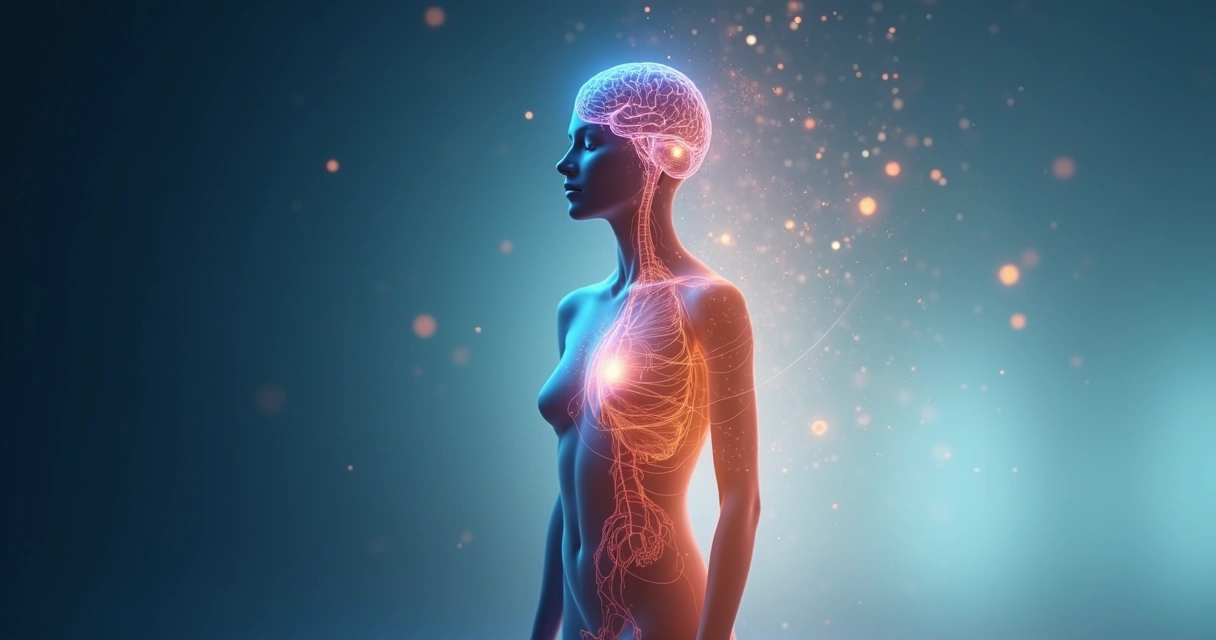
For decades, conversations about health and personal growth often kept “mind” and “body” at a distance, treating them as separate entities. Over the years, we noticed a shift: interest in the connection between our thoughts, emotions, and physical state has grown dramatically. Yet, misinformation and outdated beliefs about this connection persist. Here, we want to share five common misconceptions about mind-body integration and what truly defines a flourishing, interconnected human experience.
Misconception 1: Mind-body integration is only about physical health
It's easy to assume that mind-body practices target only the body, helping with pain, energy, or immunity. We’ve heard this belief many times, but it goes much further. Mind-body integration is not just about soothing muscle tension or boosting your immune system.
True mind-body integration touches every aspect of our lives, including our relationships, decision making, capacity for empathy, and even how we seek meaning or purpose. For example, someone experiencing chronic stress due to work may find that their thoughts (mind) directly affect blood pressure and digestive health (body). At the same time, unaddressed physical symptoms can cloud thinking and lower motivation, impacting emotional resilience and social interaction.
When we understand that mind and body influence each other, we unlock more than “physical wellness.” We step into emotional awareness, conscious behavior, values, and even how we navigate change.
The mind and body do not live in isolation.
Misconception 2: Mind-body connection is just positive thinking
Many guides and influencers claim that optimism will solve everything—think positively and life changes. While a constructive mindset does help, mind-body integration is not as simple as repeating affirmations or ignoring difficult emotions.
- Our feelings often start in our bodies: adrenaline causes our heart to race. Gut discomfort echoes our anxiety. Mind-body techniques should acknowledge, process, and integrate these signals instead of suppressing or “overwriting” them with forced optimism.
- Simply telling ourselves to think positively can even make us more anxious if we deny what we’re really experiencing. That “gap” between real feeling and forced belief can make our internal conflict worse.
The power of integration lies in welcoming what is present—pleasant or painful—and responding collaboratively, not by shutting out signals from our body or mind.
Misconception 3: Mind and body are separate, and one always dominates
This misconception remains widespread: “The body is just a machine, controlled by mental willpower”; or, the reverse, that we’re prisoners of our biology. Both ideas miss something fundamental.

We’ve seen in many cases that neither mind nor body exists in a vacuum or sits at the “top” all the time. For instance, let’s look at how grief feels: emotions are experienced both as thoughts (memories, regrets, hopes) and bodily sensations (tight chest, tears, exhaustion).
We believe that human experience flows between mind and body, with each influencing the other and often working together to help us adapt, learn, and recover. That’s why, when one suffers, the other is affected too. Real integration is about partnership, not control or dominance.
Mind and body speak in the same language.
Misconception 4: Mind-body integration requires advanced spiritual techniques
A common barrier we see is this: “I don’t have time for complex meditation” or “I’ll need new skills I don’t have.” In our experience, the opposite is true.
While there are sophisticated practices and philosophies, most integration begins with small, simple steps within reach of most adults, such as:
- Paying mindful attention to breathing for a minute in between meetings
- Pausing to notice physical signals—shoulders tensing, heart pounding—without immediate judgment
- Reflecting on where an emotion “lives” in the body and allowing it space
- Moving intentionally, like stretching or walking with attention to sensation
You don’t need years of spiritual discipline to begin connecting internal awareness with outward actions. With practice, these everyday actions can build toward more mature integration, grounding individuals in genuine presence and clarity.
Misconception 5: Integration is a one-time achievement
Many assume they will eventually “achieve” mind-body unity, as if it were a box to check. But what we see is something more dynamic.

Integration is a process. It changes as our bodies, minds, relationships, and environments do. Some days, we feel deep harmony; other days, stress or crisis shakes us up and old patterns return.
We see integration not as a destination, but as a continual cycle of awareness, choice, feedback, and adjustment. Sometimes we notice growth in mundane moments—handling frustration calmly during a traffic jam, or tuning in to fatigue before burnout sets in.
Every moment invites us to recognize the signals from both our inner and outer worlds, and act responsibly with what we learn.
Mind-body integration grows with us.
Conclusion
Misconceptions about mind-body integration can keep us from making meaningful changes and reaching greater clarity, presence, and well-being. By recognizing that integration moves beyond just health concerns, positive thinking, or advanced techniques, we approach ourselves with greater realism and compassion. We do not chase perfection or deny discomfort—instead, we co-create our own experience as embodied, conscious beings. Day by day, we move toward a richer, more authentic self-understanding that touches every layer of our lives.
Frequently asked questions
What is mind-body integration?
Mind-body integration is the ongoing process of recognizing and acting upon the deep interconnection between our thoughts, emotions, bodily sensations, behaviors, and values. Rather than seeing these as separate or competing, integration helps us become more self-aware, adaptive, and resilient. It’s about noticing how internal and external experiences influence each other and making conscious choices based on that awareness.
How does mind-body integration benefit health?
Mind-body integration supports health in many ways. It can reduce symptoms of chronic stress, aid in recovery from illness, improve sleep, lower blood pressure, and enhance immune response. At the same time, it strengthens emotional regulation and helps develop habits that support longer-term wellness. When mind and body are working together, it becomes easier to make choices that serve overall well-being.
What are common myths about mind-body connection?
Some of the most common myths are that mind-body integration only benefits physical health, that positive thinking is all you need, or that either the mind or body “controls” everything. Other myths include believing you need advanced techniques to integrate, or that it’s a goal you reach once and for all. In reality, integration is broad, inclusive, and evolves with our lives.
Is mind-body integration supported by science?
Yes, modern research has shown links between mind and body in areas like stress, immunity, chronic pain, and even social relations. Studies consistently highlight the ways psychological, social, and physical factors interact. While not every method has equal evidence, the foundation of connection is widely recognized in fields from medicine to psychology and neuroscience.
How can I practice mind-body integration?
You can start with simple daily actions: notice your breath, scan your body for tension, sit with emotions instead of avoiding them, and combine movement with attention (like mindful walking). Allow yourself to observe, reflect, and choose rather than forcing yourself to “think positive” all the time. With practice, even these ordinary actions can build more conscious, adaptive ways of living.