Uncertainty is a part of every life. It comes in big events and quiet moments. Even something as simple as a morning traffic delay can spark unease. Sometimes uncertainty is a whisper, sometimes it shakes the ground. Many of us feel caught between wanting control and knowing control is never full.
So how do we actually map our relationship with uncertainty? How do we find out where we stand with it, not only in thought, but in emotion, imagination, and action? In our experience, mapping this relationship is less about making uncertainty disappear and more about seeing it with wider, wiser eyes.
The nature of uncertainty
Uncertainty is not the absence of knowledge; it is the presence of possibilities we cannot fully predict. To map our relationship with uncertainty, we must first understand how it appears in life.
- It shows up in our stories about the future.
- It manifests in changes at work, health, or relationships.
- It appears when important choices offer no clear answer.
- It lingers in our reactions to news and world events.
Sometimes, we treat uncertainty as a threat. Other times, as a challenge, a mystery, or even a gift. Our relationship with it is never fixed. It changes with age, context, or even just a good or bad night’s sleep.
There are no maps for the future, only for ourselves.
Tracing your personal uncertainty pattern
We believe self-observation is the first step. Everyone feels uncertainty, but the ways we feel it are unique. Here are some reflective questions we suggest for mapping your personal pattern:
- When was the last time uncertainty pressed on you the hardest?
- Where in your body do you feel it—tightness, butterflies, restlessness?
- Do you seek quick decisions to escape it, or do you freeze up and avoid action?
- Do you judge yourself for not knowing what’s next?
- What stories do you tell yourself about people who "handle uncertainty well"?
Even simple reflection can reveal that uncertainty is not just out there—it lives inside us, in feelings, stories, and habits. We may find our relationship with it has old roots: learned at home, at school, or in society.
Why some uncertainty feels safe—and some doesn’t
Not every unknown scares us. Sometimes, uncertainty feels like the start of something new. Other times, it feels like loss or danger. In our experience, this is shaped by a mix of emotion, memory, and meaning.
- Context: Are we facing uncertainty in a familiar domain, or are we far from our comfort zone?
- Support: Are there people who listen and help, or do we feel alone with the unknown?
- Belief: Do we trust in our ability to handle surprises, or fear being overwhelmed?
Uncertainty changes shape in different company.
By mapping these conditions, we can see patterns. Maybe we handle uncertainty well at work, but not with health. Maybe the reverse. Recognizing this is not a sign of weakness, but of awareness.
The role of imagination and fear
Our minds have a habit of filling uncertain spaces with stories—sometimes horror stories. Imagination is powerful. It can help us prepare and grow. It can also stir anxiety.
When we picture the future, uncertainty becomes a canvas for our hopes and fears alike. If fear dominates, our thoughts may spiral, projecting worst-case scenarios. But imagination also holds potential. It can open doors: new options, perspectives, and paths forward.
Practical steps to shifting the story
If we notice our imagination turning mostly to fear, we recommend three gentle shifts:
- Name it: When uncertainty brings fear, simply note what you are feeling without judgment.
- Fact-check: Ask gently, “Is this worry a real risk or just a story my mind is telling?”
- Broaden the scene: Imagine two other ways things could go—one positive, one neutral. This loosens the grip of fear on imagination.
In our experience, these small practices can help turn uncertainty from a threat into a field of ideas. Sometimes, this begins with one honest conversation—with a friend or even with ourselves.
Responding rather than reacting
Uncertainty often sets off automatic reactions. These are quick, instinctive, and sometimes useful. But they may not always align with our true needs. Mapping our tendency to react allows us to pause, even for a split second, and choose the next step.
Pause is power.
- Some of us seek control—we want to tidy what is messy.
- Some distract ourselves—busyness over feeling.
- Some of us passively wait, hoping the unknown just passes by.
We can learn to respond to uncertainty with curiosity and care, not just fear or denial. This is possible when we become aware of what is happening right now, not just what we imagine might happen next.

Building a new map: tools for working with uncertainty
In our practice, we have seen several strategies help people shift their relationship with uncertainty. None eliminate uncertainty. Instead, they create space for learning and growth.
- Awareness practices: Mindful breathing, short pauses during stress, gentle scans of body and thought.
- Questions for curiosity: "What else might be possible here?" "Can I find one good thing in this not knowing?"
- Connecting with others: Sharing uncertainty, hearing supportive stories, knowing none of us is alone with it.
- Story rewriting: Turning the “I can’t handle this” script into “I have handled unknowns before.”
- Caring boundaries: Choosing where to focus energy, stepping back from anxiety triggers, limiting exposure to stressors.
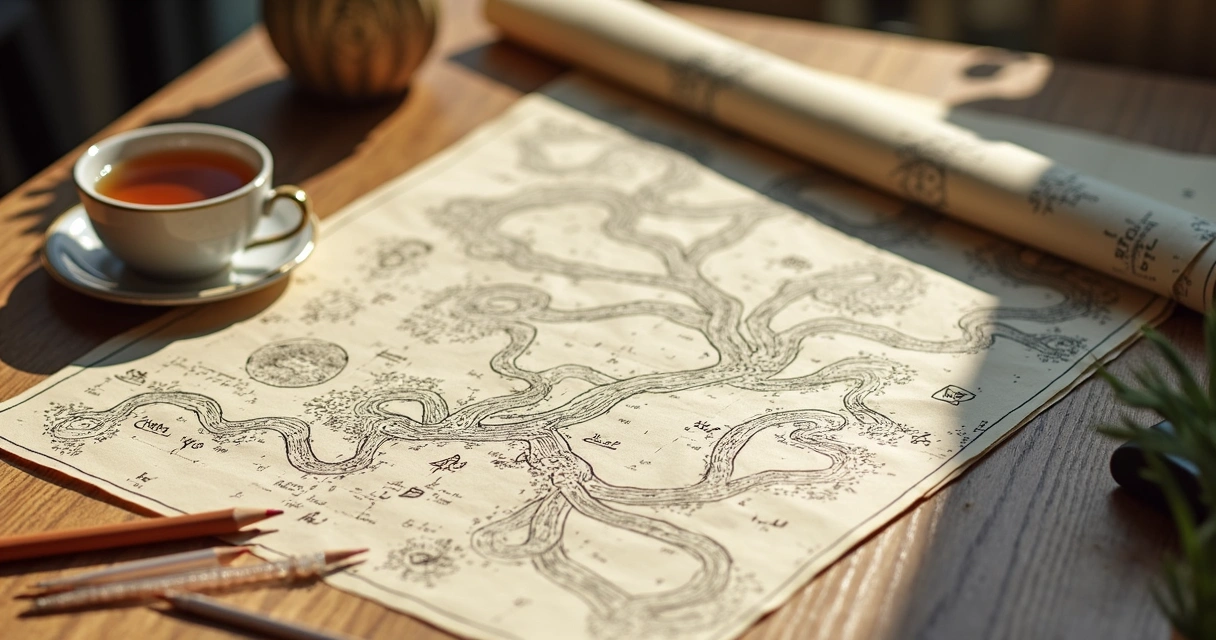
These tools are like markers on a personal map. They do not guarantee no storms. But they help us orient ourselves when the clouds come.
From resistance to acceptance
One of the biggest shifts in our relationship with uncertainty happens when we stop fighting it at every turn. Acceptance is not giving up. Instead, it is agreeing to meet life as it is, unknowns and all.
Uncertainty is part of growth.
We have found that acceptance creates space for creativity, empathy, and even joy to arise in the middle of uncertainty. It lets us see what is here now, instead of what is missing.
This is not something that happens all at once. Our maps are always works in progress. But even the smallest movement from tight resistance to gentle acceptance can change the whole experience.
Conclusion: The gift of knowing where you stand
Mapping your relationship with uncertainty does not remove the unknown, but it does reveal new pathways through it. We do not need to love uncertainty, but we can get to know it, respond with awareness, and find real support in community, inside and out.
Seen closely, uncertainty is just another name for life as it unfolds. When we name our feelings, track our patterns, and reach out to others, we build a new relationship with the unknown. This is how we grow—together.
Frequently asked questions
What is uncertainty in daily life?
Uncertainty in daily life means situations where outcomes, results, or future events are not fully predictable. It can be as simple as not knowing what will happen at a meeting or as big as not being sure about a career change. Uncertainty arises in many forms: through health, relationships, finances, or even daily plans.
How can I manage uncertainty better?
Managing uncertainty is helped by first noticing how it affects your mind and body. Pause, breathe, and notice your physical and emotional reactions. Use simple reflection, share your worries with someone you trust, and practice being present instead of racing ahead mentally. Small moments of acceptance and self-support can ease the pressure created by uncertainty.
Why do people fear uncertainty?
People often fear uncertainty because it brings a sense of lacking control. The unknown can feel like a risk, making us worry about being unprepared or unable to cope. Sometimes past experiences of difficulty or sudden change make us even more sensitive to uncertainty.
What are the benefits of embracing uncertainty?
Embracing uncertainty can open us to new possibilities, learning, and creativity. It encourages flexibility, helps develop resilience, and allows us to respond to challenges with greater calm and resourcefulness. Allowing some uncertainty can even reduce anxiety in the long term since fighting it usually makes tension worse.
How does uncertainty affect decision making?
Uncertainty can make decisions feel harder, slowing down action or producing stress. Sometimes, it leads to hasty decisions just to escape not knowing. Other times, it causes indecision or avoidance. Building a better relationship with uncertainty makes decision making more thoughtful, allowing room for flexibility and for changing plans if needed.