


We often hear people say, “These are my values,” as if the sentence ends the matter. But in real life, values do not sit still so neatly. We may defend one principle at age twenty, question it at thirty-five, and live it in a deeper way at fifty. That does not always mean we became inconsistent. Sometimes, it means we matured.
Values can stay rooted while their expression changes with life experience.
In our experience, this is where many people get confused. They think change means betrayal. Or they think firmness means rigidity. Neither view helps much. Human life is more subtle than that.
A systematic review on value change in adulthood found a pattern that feels very true to lived experience: values show moderate to high stability over time, yet small personal shifts still happen. So the real question is not whether values ever change. The better question is how they change, and what that says about us.
Why this question matters
If we never review our values, we may end up living from old loyalties that no longer fit our present conscience. If we change them too easily, we may drift with pressure, fear, or fashion. Both paths create inner conflict.
What guides us shapes what we become.
We have seen this in ordinary moments. A person says family comes first, but never protects time for home. Another says freedom matters, yet avoids every hard choice. A third one starts to value peace more after years of conflict and finally learns that calm is not weakness. In each case, values are not just ideas. They become visible in patterns.
The seven questions below can help us see whether our values are fixed in a healthy way, growing in a healthy way, or simply reacting to circumstance.
Seven questions to ask yourself
1. Do our values stay the same in every context?
This is a good place to begin. We may believe honesty matters, but do we keep that value at work, in love, with friends, and with ourselves? If a value only appears when it is safe, convenient, or rewarded, it may be more of a preference than a true guide.
A real value tends to remain present across different areas of life.
That said, the form may change. Honesty with a child is not identical to honesty in a legal setting. The principle stays. The expression adapts.
2. Have our values changed after pain, loss, or success?
Life events often bring hidden values to the surface. A health scare may make us care more about time than status. A betrayal may deepen our need for truth. Success may reveal whether we truly value service or only recognition.
We should not fear these shifts too quickly. Sometimes pain removes illusion. Sometimes joy does too. The point is to ask whether the change reflects deeper clarity or just emotional reaction.
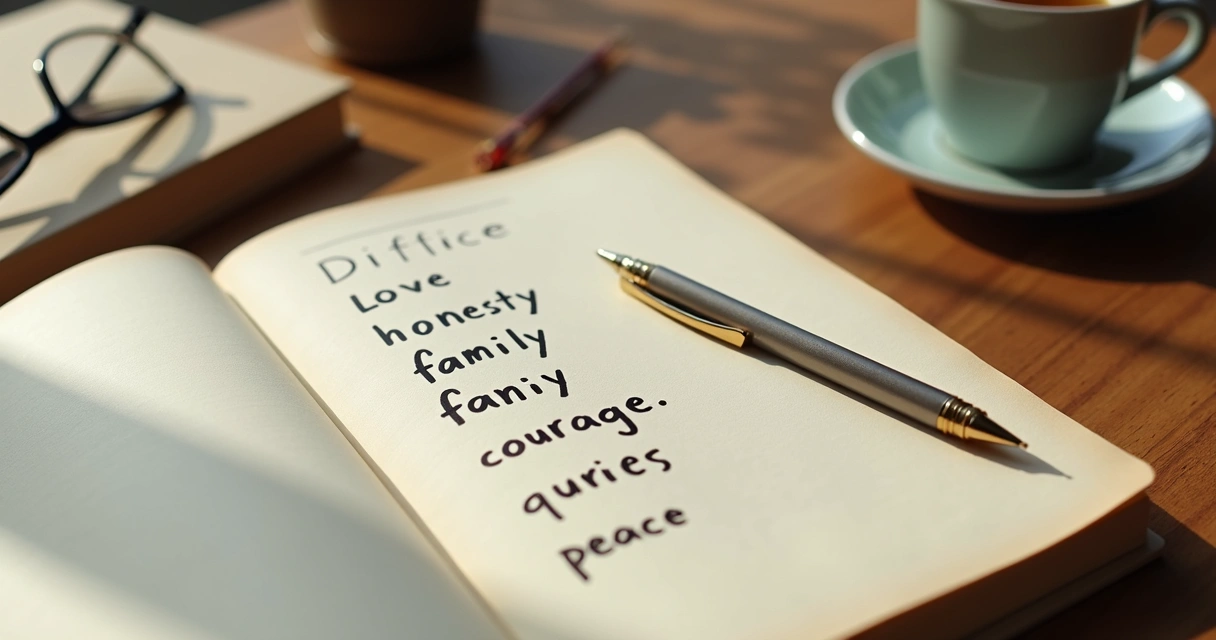
3. Do we defend our values, or only talk about them?
Many people can name admirable values. Fewer can pay the price for them. We say we value respect, but do we keep it when we are angry? We say we value justice, but do we stay silent when speaking costs us comfort?
We think this question is uncomfortable for a reason. It reveals whether values are decorative or lived.
- Spoken values sound good.
- Tested values cost something.
- Lived values shape identity.
If our values disappear under pressure, they may still be in formation. That is not failure. It is information.
4. Are our values inherited, chosen, or examined?
Many of our first values come from family, culture, religion, school, or social class. That is natural. Early life gives us language before it gives us reflection. But maturity asks more from us.
At some point, we need to ask: do we still believe this because it is true to our conscience, or because we were taught never to question it?
Unexamined values can govern a life long after their meaning has faded.
This does not mean we must reject what we inherited. Often, we keep part of it. Yet when we choose a value consciously, it becomes more stable and more honest.
5. Do our priorities shift with age and responsibility?
This is common, and often healthy. A younger person may value freedom above all. Later, care, commitment, or legacy may gain more weight. The value system is still coherent, but the ranking changes.
A large longitudinal study on values, personality, and well-being found that values tend to be less fixed than personality traits, while still showing meaningful consistency over time. We find that insight useful because it reflects what many people feel but cannot name: we remain ourselves, yet our moral focus can move.
That movement does not always mean instability. It may show a wider sense of life.
6. When we change a value, do we become more coherent or more confused?
This question helps separate growth from drift. Some changes bring relief. We feel more aligned, more sincere, less divided. Other changes leave us scattered. We start adapting to whoever is near, saying what fits the moment, and losing our center.
A healthy shift in values usually produces signs such as these:
- More inner clarity.
- Less need to pretend.
- Better alignment between word and action.
- Greater responsibility for consequences.
If the opposite happens, we may not be growing. We may just be reacting.

7. Can we name the value beneath the value?
This is often the deepest question. Sometimes what looks like one value is driven by another. A person who says they value discipline may really value control. Someone who says they value kindness may really fear rejection. Another may insist on independence, while actually protecting dignity after years of dependence.
When we identify the value beneath the declared one, we begin to understand ourselves with more honesty. That honesty can change everything. Quietly, but deeply.
How to read your answers
If our answers show consistency, reflection, and responsible change, our values are likely alive rather than rigid. If our answers show contradiction, borrowed beliefs, or constant reversal, we may need a slower and more honest review.
We do not think the goal is to become immovable. Stone does not grow. But neither is the goal to change with every emotion. That leaves us without form.
The wiser path sits between those extremes. Some values become deeper roots over time. Others need revision because we have learned more, suffered more, or become more truthful.
Conclusion
So, are our values static or dynamic? In most lives, they are both. The core may remain, while the order, meaning, and expression develop with experience. What matters is not change by itself or stability by itself. What matters is whether our values help us live with integrity, awareness, and responsibility.
If we want to know our values, we should watch our repeated choices, not only our stated beliefs. There, without much performance, the truth tends to appear.
Values speak loudest in action.
Frequently asked questions
What are static and dynamic values?
Static values are principles we hold as stable over long periods, such as honesty or loyalty. Dynamic values are values whose meaning, priority, or expression can shift with life experience. Most people carry both stable values and changing value priorities at the same time.
How do I know if values change?
We can notice value change by tracking our choices across time. If we now choose differently in work, relationships, or life goals, and those choices come from a new sense of meaning, our values may have changed or reordered. A single mood is not enough. Repeated patterns tell more.
Can values evolve over time?
Yes, values can evolve over time. Research and lived experience both suggest that people often keep a stable core while still adjusting priorities and interpretations. This often happens after age, responsibility, hardship, learning, or a change in life stage.
Why do personal values sometimes shift?
Personal values may shift because life exposes us to new duties, pain, insight, or relationships. What once felt right may no longer match our present understanding. In some cases, values shift because we mature. In others, they shift because we are under pressure. The difference depends on how much reflection is involved.
How to identify my core values?
We can identify core values by observing what we protect, what we return to under stress, what we refuse to trade away, and where we feel most aligned. It also helps to write down moments of pride, regret, anger, and peace. These often reveal the principles that matter most to us.